Commercial Solar Solutions in Pakistan
Discover the Best Value: Commercial Solar Solutions in Pakistan
Introduction: Explore Affordable Commercial Solar Solutions in Pakistan
As businesses in Pakistan strive to reduce operational costs and adopt sustainable practices, commercial solar solutions offer an excellent way to achieve both goals. This guide explores the commercial solar solutions in Pakistan, highlighting their benefits, pricing, and the factors influencing their cost. Discover how investing in solar technology can enhance your business’s energy efficiency and sustainability.
What are Commercial Solar Solutions?
Commercial solar solutions are designed to meet the energy needs of businesses and commercial properties. Key components and systems include:
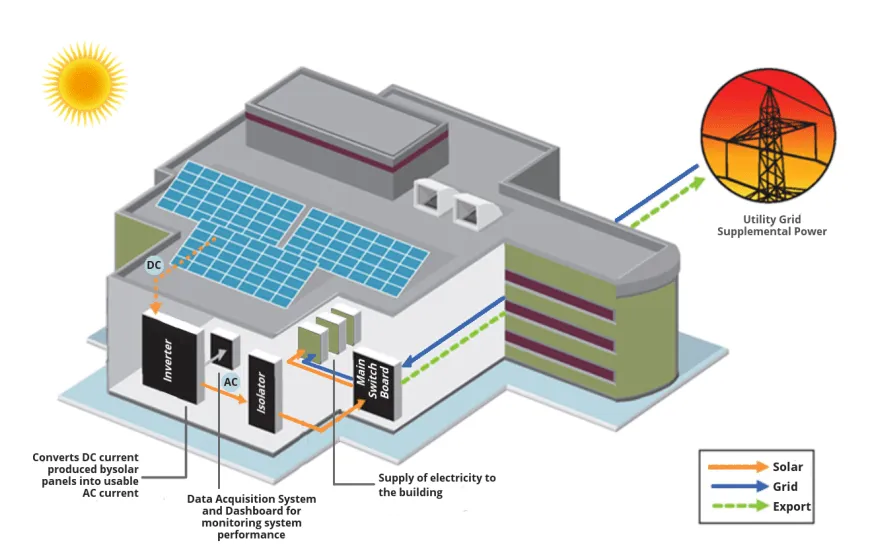
Solar Photovoltaic (PV) Systems: These systems convert sunlight into electricity using solar panels, which can be installed on rooftops or ground-mounted systems. Learn more about solar PV systems.
Solar Water Heating Systems: These systems use solar energy to heat water, which can be utilized for various business needs, including in hotels, restaurants, and manufacturing processes. Explore solar water heating options.
Solar Air Conditioning: Solar-powered air conditioning systems use solar energy to cool commercial spaces, reducing reliance on traditional electricity sources. Find out more about solar AC solutions.
Solar Lighting: Solar lighting solutions include streetlights, parking lot lights, and indoor lighting powered by solar energy. Discover solar lighting options.
Energy Storage Solutions: Solar energy storage systems, such as batteries, store excess energy generated during the day for use during non-sunny periods, enhancing energy reliability. Read about solar energy storage.
Factors Influencing Commercial Solar Solutions in Pakistan
Type of Solar Solution: The type of commercial solar solution impacts both its cost and effectiveness. Learn more about different types of solar systems.
Quality of Equipment: The performance and price of commercial solar solutions depend on the quality of solar panels, inverters, and other components. High-quality equipment offers better efficiency and longevity but may have a higher initial cost. Check out our reviews on top solar equipment.
Installation Costs: Installation complexity and site-specific conditions can influence the overall cost of commercial solar solutions. Professional installation ensures optimal performance. For detailed information, visit HomeAdvisor’s Guide.
Maintenance Requirements: While solar systems generally require minimal maintenance, the type and scale of the system can affect ongoing costs. Regular maintenance is crucial for efficiency and longevity. Read more about solar maintenance.
Government Incentives and Subsidies: Government incentives and subsidies can significantly reduce the cost of commercial solar solutions. Check for available incentives at Pakistan’s Ministry of Energy.
Pricing Overview for Commercial Solar Solutions in Pakistan
In 2024, the cost of commercial solar solutions in Pakistan varies based on the type of system and its capacity. Here’s a general range for common commercial solar solutions:
Solar PV Systems: Typically range from PKR 500,000 to PKR 5,000,000, depending on the system size and installation complexity.
Solar Water Heating Systems: Generally cost between PKR 200,000 to PKR 1,000,000, based on system size and capacity.
Solar Air Conditioning: Prices range from PKR 1,000,000 to PKR 3,000,000, depending on the cooling capacity and technology used.
Solar Lighting: Generally costs between PKR 50,000 to PKR 500,000, based on the type and number of lighting fixtures.
Energy Storage Solutions: Can range from PKR 500,000 to PKR 2,000,000, depending on the storage capacity and technology.
Benefits of Commercial Solar Solutions
Cost Savings: Solar solutions significantly reduce electricity bills by using renewable solar energy. Over time, the savings on energy costs can be substantial.
Enhanced Energy Efficiency: Solar systems improve energy efficiency by providing a reliable and consistent power source, reducing dependence on grid electricity. Learn more about the impact of solar on energy efficiency.
Environmental Impact: Utilizing solar energy helps reduce carbon emissions and supports a cleaner, more sustainable environment. Explore the environmental benefits of solar energy.
Energy Independence: Solar solutions provide greater energy security by reducing reliance on traditional energy sources and protecting against fluctuating energy prices.
Increased Property Value: Implementing solar technology can enhance property value, making it more attractive to potential buyers or investors.
Support for the Local Economy: Investing in solar energy supports local job creation and the growth of the renewable energy sector. For more on economic benefits, visit the International Renewable Energy Agency.
Conclusion
Understanding the commercial solar solutions in Pakistan is crucial for making an informed investment decision. While the initial costs may be significant, the long-term savings, efficiency improvements, and environmental benefits make solar solutions a valuable asset for businesses. For customized quotes and expert advice, contact Gravity Engineering Solution today and take the first step towards a more sustainable and cost-effective energy future for your business.
Frequently asked questions (FAQs) Related Solar Panels
In 2024, the top solar panels in Pakistan are from leading brands like Longi, Jinko Solar, Trina Solar, and Canadian Solar.
These panels are renowned for their high efficiency, durability, and excellent performance in the Pakistani climate. Choosing the best solar panel depends on your specific energy requirements and budget.
The future of solar panels in Pakistan looks bright due to increasing government incentives, advancements in technology, and a growing need for sustainable energy sources. With policies favoring renewable energy, technological innovations, and rising environmental awareness, solar energy is set to play a crucial role in Pakistan’s energy landscape.
The Quaid-e-Azam Solar Park in Bahawalpur stands as the largest solar power installation in Pakistan. With a capacity of over 1,000 MW, it highlights Pakistan’s commitment to expanding its solar energy infrastructure..
Yes, you can run an air conditioning unit on a solar system, provided the system is adequately sized to handle the energy requirements of the AC unit.
New materials in solar panels include perovskite for higher efficiency and bifacial cells that capture light from both sides, enhancing overall energy production.
The best solar panel depends on your needs, but panels from Longi, Jinko, and Trina Solar are highly recommended for their efficiency, durability, and advanced technology.
The maximum wattage of solar panels available in Pakistan ranges from 300W to 500W or more per panel, with higher wattage panels providing increased power output.
The largest solar importers in Pakistan include major distributors and companies that bring in panels from top international brands like Longi, Jinko, and Trina Solar.
In Pakistan, south-facing solar panels are ideal for maximizing sunlight exposure and energy production throughout the day.
Yes, there is a growing solar panel manufacturing industry in Pakistan. Local and international companies are establishing production facilities to meet the rising demand for solar energy.
The best solar panels in Pakistan are typically from trusted brands like Longi, Jinko, Trina Solar, and Canadian Solar. These brands offer high-efficiency panels with strong warranties and reliability, making them ideal for various applications.
In 2024, cutting-edge solar technologies include bifacial panels, which capture sunlight from both sides, perovskite solar cells with enhanced efficiency, and heterojunction technology (HJT) that combines different cell types for superior performance. These advancements promise higher efficiency and lower costs.
Solar panels in Pakistan typically last between 25 to 30 years. Their performance may slightly decline over time, but with proper maintenance, they continue to provide reliable energy for decades.
The life cycle of solar panels typically spans 25-30 years, during which their performance gradually decreases. They continue to generate electricity but at a lower efficiency towards the end of their life cycle.
The life cycle of solar panels typically spans 25-30 years, during which their performance gradually decreases. They continue to generate electricity but at a lower efficiency towards the end of their life cycle.
In Punjab, the solar subsidy program for 2024 includes financial incentives, low-interest loans, and tax benefits for both residential and commercial solar installations. Details can be obtained from local energy authorities.
To assess solar panel quality:
Verify Certifications: Look for international quality certifications like IEC.
Evaluate Efficiency Ratings: Higher efficiency panels are more effective.
Inspect Warranties: Longer warranties often indicate higher quality.
Review Brand Reputation: Opt for reputable brands with proven reliability.
Top solar brands in Pakistan include Longi, Jinko Solar, Trina Solar, and Canadian Solar. These brands are favored for their superior efficiency, reliability, and customer support.
Longi and Jinko are both excellent choices. Longi excels in monocrystalline panel efficiency, while Jinko offers robust performance and value for money. The best choice depends on your specific needs and budget.
Solar panel prices in Pakistan are decreasing due to technological advancements, increased market competition, and government incentives that reduce overall costs and drive affordability.
Latest technologies in Pakistan include bifacial panels, which capture light from both sides, and advancements in thin-film and perovskite solar cells, which offer improved efficiency and flexibility.
Jinko Solar, a publicly traded company, was founded by Chen Kangping. The company, headquartered in Shanghai, China, is a leading player in the global solar industry.
Jinko Solar is listed on the New York Stock Exchange (NYSE) under the symbol JKS.
There isn’t a single “number one” panel, but Longi, Jinko, and Trina Solar are top choices in Pakistan for their high efficiency and reliability.
Powerful solar panels are typically those with higher wattages, such as those exceeding 400W. Panels from brands like Longi and Jinko are known for their high power output.
Identify a solar panel by checking:
Brand and Model: Usually found on the panel’s label or datasheet.
Certification Marks: Look for quality and performance certifications.
Technical Specifications: Information on efficiency, wattage, and cell type.
Check the wattage of a solar panel by:
Reading the Label: Most panels have wattage information on their label.
Using a Multimeter: Measure voltage and current, then calculate wattage (Watts = Voltage x Current).
To test photovoltaic (PV) panels, perform:
Visual Inspections: Check for physical damage or defects.
Electrical Testing: Measure voltage and current with a multimeter.
Performance Testing: Compare actual output with expected performance under standard test conditions.
The solar policy in Pakistan for 2024 emphasizes increased incentives and subsidies for solar energy projects, net metering to facilitate power sales back to the grid, and streamlined regulatory processes to encourage wider adoption of solar technology.
The scope of solar energy in Pakistan is extensive, driven by abundant sunlight, supportive government policies, and a rising need for clean energy solutions. Solar energy is poised to meet growing energy demands while reducing reliance on fossil fuels.
The best solar panels in 2024 are from Longi, Jinko, and Trina Solar. These brands offer advanced technology, high efficiency, and strong warranties.
In 2024, Pakistan’s solar panel program includes enhanced financial incentives, subsidies for residential and commercial projects, and net metering policies to support solar energy adoption.
Monocrystalline Panels: High efficiency and space efficiency.
Polycrystalline Panels: Cost-effective but slightly lower efficiency.
Thin-Film Panels: Lightweight and flexible with lower efficiency.